
In EV charging, plenty of numbers compete for your attention. But for anyone who actually runs vehicles, one thing matters more than all the rest: whether the charger works the moment you need it. Reliability isn’t a nice-to-have feature sitting alongside the others. It’s the whole job. A charger that isn’t dependable isn’t really doing much of anything at all.
The Industry’s Real Weak Spot
Charging has a reliability problem, and it’s well documented. As Canary Media reported, a nationwide survey by the nonprofit Plug In America found that 68% of U.S. EV drivers had run into a broken or nonfunctional charger within the previous year, and a Harvard Business School analysis of driver reviews landed on an average reliability score of just 78%.
The deeper issue shows up when drivers actually try to plug in. J.D. Power’s 2025 public charging study found that 14% of EV drivers who pulled up to a public charger still left without successfully charging, and the most common reason by a wide margin was the charger being out of service or not working properly, the cause of 60% of those failed visits.
Put simply, “online” and “working” aren’t the same thing, and that gap is especially costly for commercial operators.
Why Reliability Matters Most for a Fleet
For a business running vehicles, that gap isn’t a nuisance. It’s a vehicle that can’t roll, a route that doesn’t run, and a promise to a customer you suddenly can’t keep. A driver at a public station can go hunt for another plug. Your operation usually can’t. When vehicles come back to base counting on a charge before the next shift, the charger has to deliver, and it has to deliver every single time.
That’s why we put reliability ahead of everything else. Almost everything else in charging is negotiable. This isn’t.
Related: How to Document Your Fleet’s Daily Routine Before Electrifying
A Number Is Only as Good as What’s Behind It
Here’s the catch those studies expose: a reported uptime figure means very little on its own. That same research found that swapping in new hardware offers only a short-term fix, while real reliability comes from preventative maintenance and software that’s kept current. What makes uptime real, in other words, is the work happening behind the number.
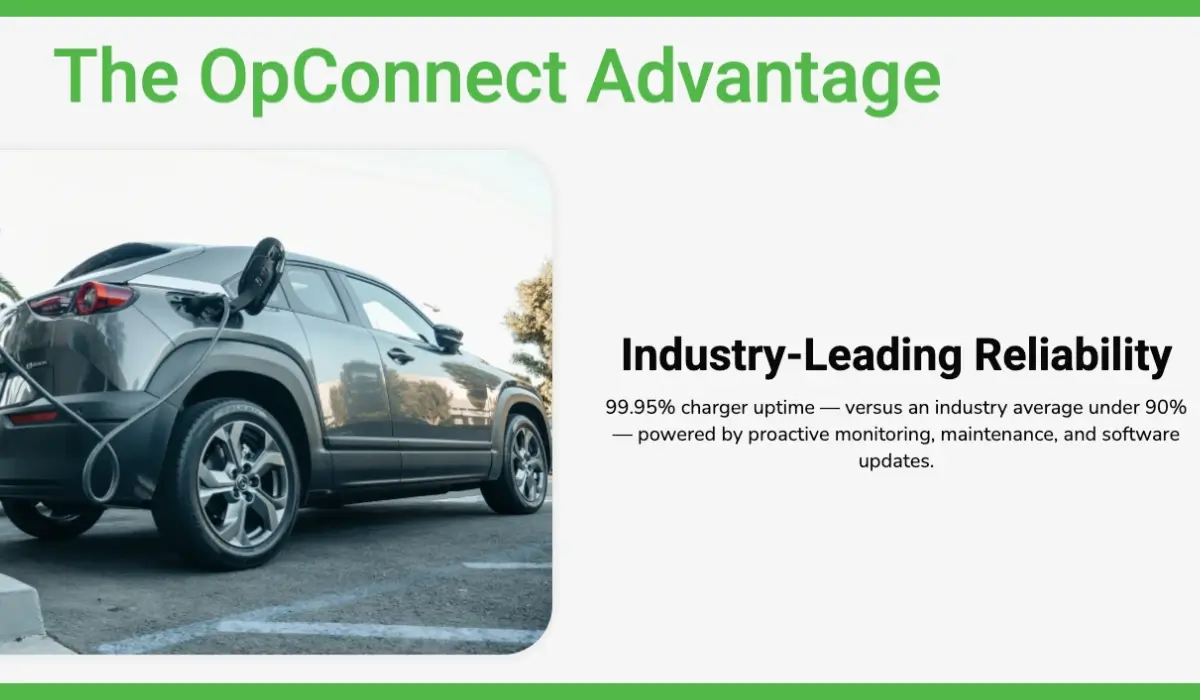
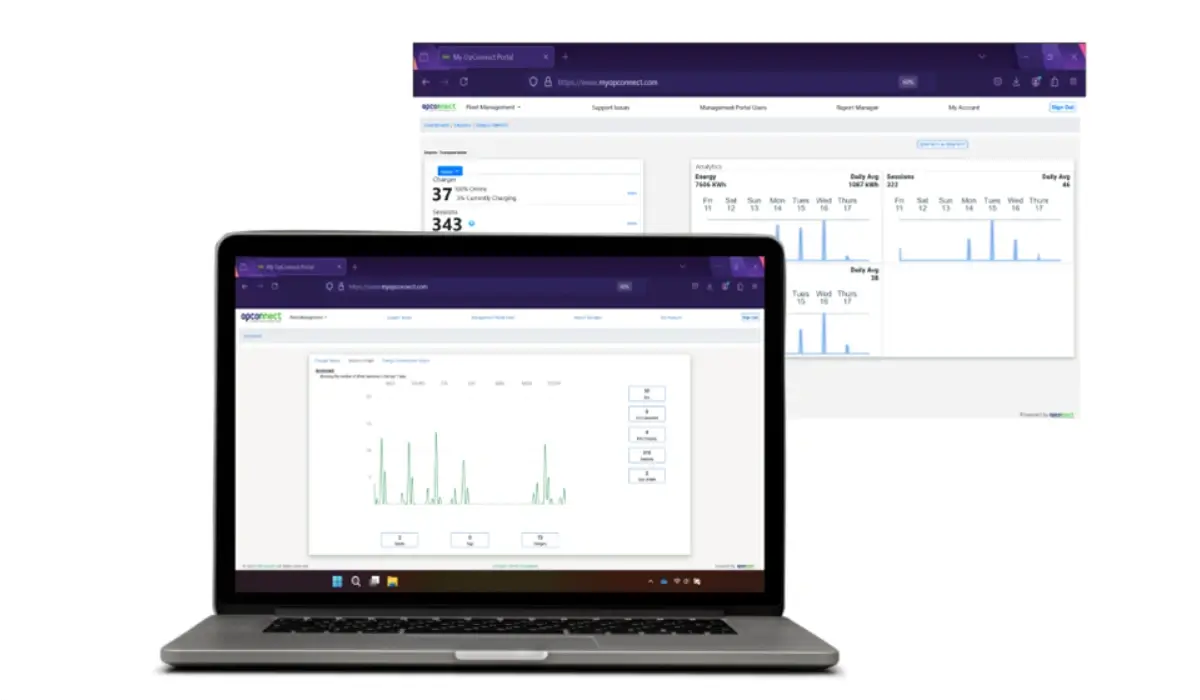
That’s exactly how we back our stated 99.95% charger uptime at OpConnect: with proactive monitoring, maintenance, and software updates, plus 24/7 support standing behind every station. Our ev charging management software gives your team real-time visibility into every charger, so a problem gets caught and cleared before it ever becomes a missed route.
Built for Uptime From the Start
Reliability isn’t something you bolt on after the fact. It starts with how the system gets designed, installed, and looked after. We design, install, support, and maintain the charging as one accountable partner, with hardware built in Portland, Oregon.
Commercial ev charging installation handled by a single team that stays responsible from day one is the foundation dependable ev fleet charging is built on. When one partner owns the whole picture, there’s no finger-pointing when something needs attention. There’s just a fix.
Reliability Is the Whole Point
Speed and features have their place, but none of it counts for much if the charger’s down when your vehicle pulls in. For ev charging for businesses, reliability is the line between infrastructure you can build an operation on and infrastructure you’re forced to work around.
That’s the standard we hold ourselves to, and it’s the one your fleet should hold any charging partner to. When your vehicles need to charge, our job here in OpConnect is simple: make sure they can.
Sources & Further Reading:
- Canary Media — Bad Data Is Souring the EV-Charging Experience. Here’s How to Fix It.: https://www.canarymedia.com/articles/ev-charging/bad-data-is-souring-the-ev-charging-experience-heres-how-to-fix-it
- J.D. Power — 2025 U.S. Electric Vehicle Experience (EVX) Public Charging Study: https://www.jdpower.com/business/press-releases/2025-us-electric-vehicle-experience-evx-public-charging-study