
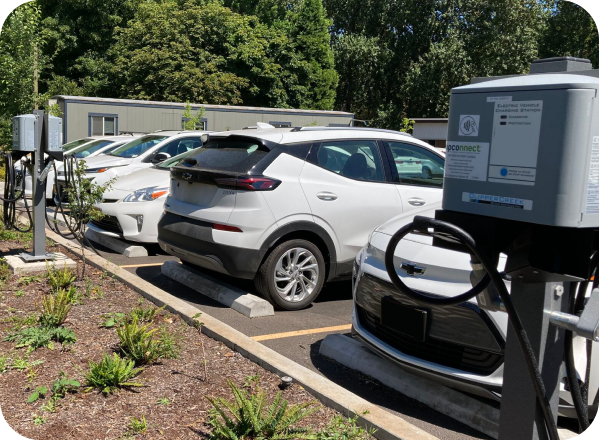
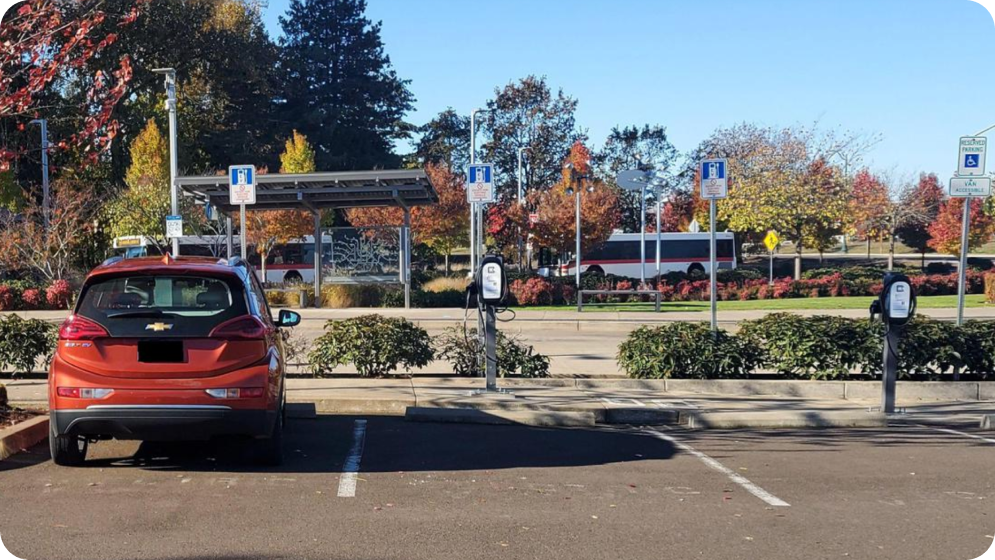
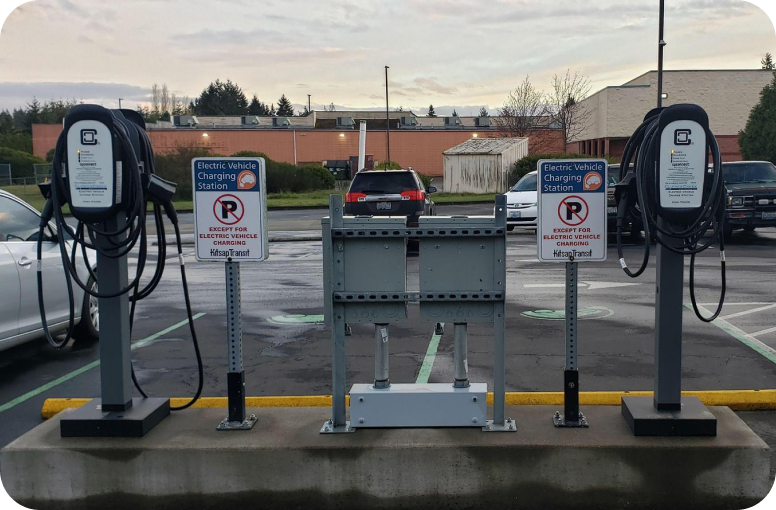
Once workplace chargers are up and running, a natural next question comes up: should visitors be able to use them too? Clients coming in for meetings, vendors, contractors, job candidates, and guests at your campus or facility may all arrive in electric vehicles.
Opening your chargers to visitors can be a thoughtful touch that reflects well on your organization. It can also create friction if it’s done without a plan. Employees may feel squeezed out, visitors may struggle to start a session, and nobody may be sure who handles problems. Here’s what to think through before you open the gate.
Decide Who Comes First
Your chargers were most likely installed with employees in mind, so the first decision is how visitors fit alongside them. The Department of Energy’s Alternative Fuels Data Center notes that employers can limit charging to employees or also allow visitors during set hours of the day, and suggests giving priority to employees who rely on workplace charging for their commute.
In practice, many organizations take one of a few approaches:
- Dedicated visitor spaces near the main entrance, separate from employee charging
- Shared access during set hours, such as midday when employee demand is lower
- After-hours access once most employees have gone home
- Invitation-based access, where your team grants access to expected guests ahead of time
There’s no single right answer. The best fit depends on how busy your chargers already are and how many visitors you typically see. If you’re still sorting out employee policies, it’s worth settling those first so visitor access builds on a stable foundation.
Make It Easy for First-Time Users
Employees learn your chargers quickly because they use them every day. Visitors don’t have that advantage. They’re arriving at an unfamiliar site, often on a schedule, and they need charging to just work.
That’s not a small detail. EC&M’s coverage of the 2026 J.D. Power public charging study reported that Level 2 charging satisfaction declined, driven mainly by lower scores for ease of payment and ease of charging. Ease of finding the location is also one of the factors driving the rate. Those are exactly the moments where a first-time visitor is most likely to get stuck.
A few things go a long way:
- Clear wayfinding from your entrance or visitor parking to the chargers
- Simple instructions at the charger explaining how to start a session
- A clear point of contact if something doesn’t work
- Consistent rules posted where visitors will actually see them
The goal is a visitor who pulls in, plugs in, and heads to their meeting without having to ask anyone for help.
Related: What Contractors and Service Fleets Consider Before Adding EV Charging

Set Clear Rules and Pricing for Each Group
Visitors and employees often need different rules. You might offer free charging to employees and set a separate rate for guests, or keep charging free for clients while asking contractors to pay. You may want time limits for visitors that don’t apply to staff.
Our EV charging management software supports this with configurable rate plans and customized pricing structures for different driver groups, along with role-based access controls. That means you can set rules for employees, visitors, and fleet vehicles separately instead of forcing one policy onto everyone.
Whatever you choose, keep it consistent and easy to explain. AFDC stresses that a clearly stated, consistent policy matters, especially for employees whose decisions depend on it.
Assign Ownership Before You Open Access
When a visitor’s session won’t start or someone leaves a car parked at a charger all afternoon, who handles it? AFDC recommends naming one responsible person or group for operations and enforcement, so everyone knows who to contact.
For visitor charging, that might be your front desk, facilities team, or security staff. Whoever it is should be able to see charger status and know how to get help quickly. AFDC also points out that sites without on-site staff should plan for security, which matters more once people outside your organization have access.
Related: Charging Access Policies That Keep Workplace Peace
Keep Chargers Reliable for Everyone
A broken charger is a minor annoyance for an employee who can try again tomorrow. For a visitor, it’s often their only impression of your site. That raises the stakes on reliability.
Our hardware is built in Portland, Oregon, and backed by 98% hardware uptime on our chargers, 99.95% server uptime on our software, and 24/7 support and monitoring. Remote diagnostics and real-time charger status help your team catch and resolve issues quickly.
Use Data to Adjust Over Time
Once visitors start charging, watch how it actually goes. Usage reporting shows when visitor demand peaks, whether employees are getting crowded out, and which rules are working. You might find visitor use is light enough to expand access, or busy enough that dedicated visitor spaces make sense.
Many organizations also share sites between staff, guests, and EV fleet charging for company vehicles. Clear data makes it much easier to balance those needs as they grow.
Related: How to Plan EV Charging Access for a Growing Workplace

Open Your Chargers With Confidence
Opening workplace charging to visitors works best when it’s planned: clear priorities, simple access, sensible rules for each group, and someone accountable when things need attention. We design, install, support, and maintain EV charging for businesses, workplaces, and campuses, including the software that makes access rules easy to manage.
If you’re considering visitor access or planning a commercial EV charging installation for your site, connect with our team. You can also learn more about our workplace charging solutions.
Sources & Further Reading:
- U.S. Department of Energy, Alternative Fuels Data Center — Workplace Charging for Electric Vehicles: https://afdc.energy.gov/fuels/electricity-charging-workplace
- EC&M — Public EV Charging Reliability Improves as Newer Fast-Charging Networks Raise the Bar: https://www.ecmweb.com/electric-vehicles/news/55398458/public-ev-charging-reliability-improves-as-newer-fast-charging-networks-raise-the-bar
Related:
- What Contractors and Service Fleets Consider Before Adding EV Charging
- Charging Access Policies That Keep Workplace Peace
- How to Plan EV Charging Access for a Growing Workplace