
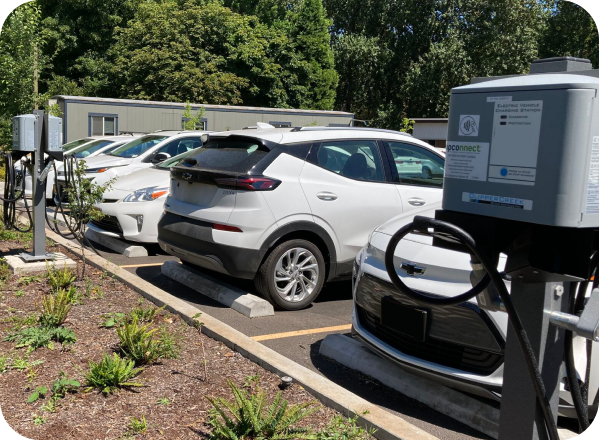
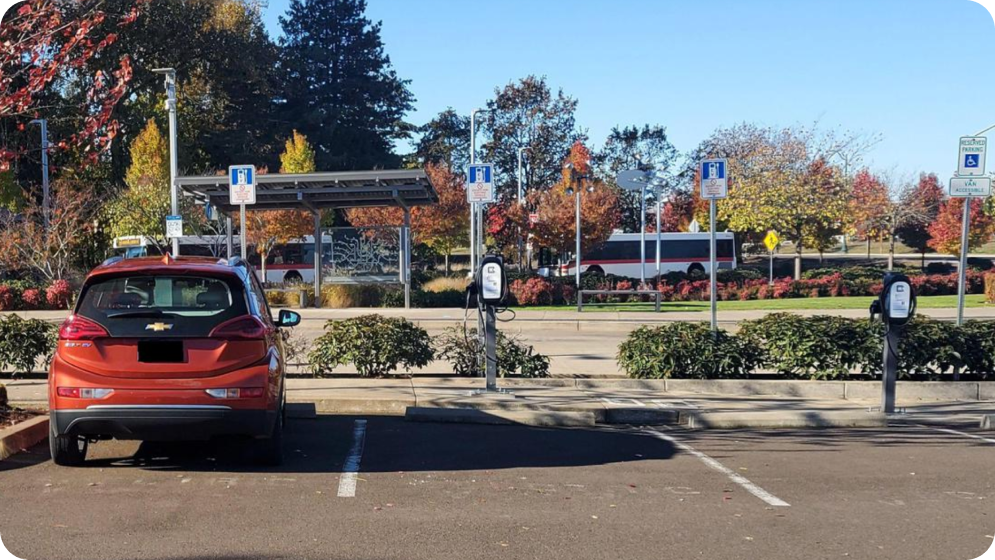
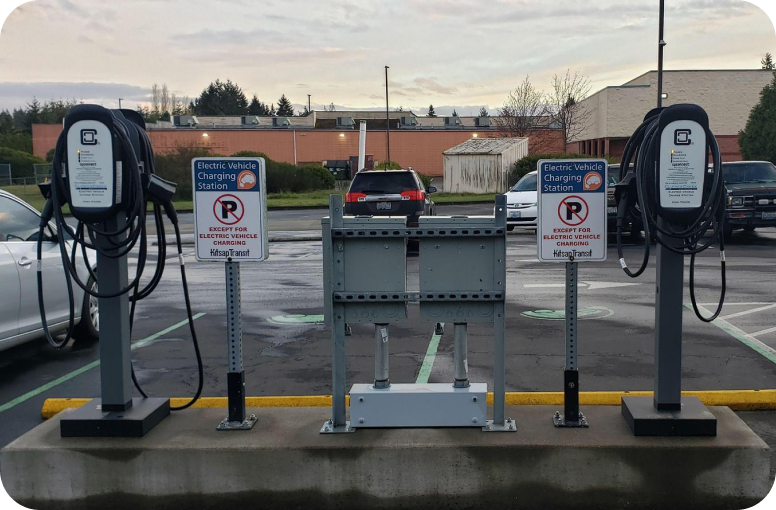
Most workplace charging programs are sized for the day they open. Two units, a handful of EV drivers, and plenty of room. The trouble is that the number of drivers only moves in one direction, and the number of chargers stays exactly where you left it.That gap is where the complaints come from. Not from bad equipment, but from a program planned once and never revisited. Here’s how to set up EV charging access so it absorbs growth instead of buckling under it.
Plan for the Driver Count You’ll Have Later, Not the One You Have Now
The most useful shift in thinking is to treat your charger count as a ratio rather than a number. What matters isn’t how many units you installed, it’s how many drivers are competing for each one, and that figure climbs on its own as employees replace their cars.
Commercial real estate firm CBRE made this point in an analysis of workplace charging demand published in May 2024. The analysis concludes that the growth of workplace charging ports hasn’t kept up with rising driver demand and changing commuting patterns. The same research found that 30% of companies prefer offices with EV charging, a figure that rose to 40% among large companies.
So when you plan, ask what the ratio looks like in two or three years, not what it looks like at launch.
Know Your Real Peak, Which Isn’t Every Day
Workplaces don’t have even demand, and planning as though they do leads to the wrong answer. CBRE’s analysis notes that office attendance peaks from Tuesday through Thursday, and that workplace charging has shifted to match, with demand concentrated in the morning and a smaller bump around midday.
That pattern matters because your infrastructure is only as good as its busiest moments. A charging program that leaves drivers stranded at 9 a.m. on a Wednesday is failing—even if those chargers sit empty all day Friday. Size and schedule your system around your actual peak demand, not your weekly averages.
Related: What Good Support Looks Like After Installation

Make the First Install the Easy One to Expand
Growth is far easier to accommodate when you plan for it during the original work rather than starting over. While the site is being designed, decide where the next units would go and what groundwork can be done once instead of twice.
This is the single most valuable conversation to have during your commercial EV charging installation, because the second phase is far simpler when it was anticipated by the first one.
Move From First Come to Managed Access Before You Have To
First come, first served works fine when there’s slack in the system. It stops working the moment demand exceeds supply, and the failure mode is social rather than technical.
Argonne National Laboratory has been working on exactly this problem. In a January 2026 piece on managing workplace charging as demand grows, the lab describes a reservation-based approach that lets employees schedule sessions, which it says supports consistent access across a limited number of chargers.
The principle holds whatever tools you use. When drivers outnumber units, some form of scheduling, rotation, or booking beats a free-for-all, and introducing it before people are already frustrated is far easier than imposing it afterward.
Decide Your Trigger for Adding Capacity Now
Most organizations add chargers when the complaints get loud enough. That’s a poor signal, because it arrives late and it reflects who is most vocal rather than what’s actually happening.
Pick a measurable trigger instead, such as a sustained utilization level during your peak hours, or a driver-to-charger ratio you don’t want to cross. Write it down. Then the question of whether to expand becomes a number your facilities team can check rather than an argument.
Related: Charging Access Policies That Keep Workplace Peace

Treat Charging as Something You Manage, Not Something You Install
The Argonne work frames workplace charging as a growing operational consideration rather than something to switch on and walk away from. That framing is the difference between a program that scales and one that quietly degrades.
Practically, it means someone owns it, reviews it on a schedule, and has the information to make decisions. It also means the sessions themselves have more flexibility than people assume, since a car parked for a full workday doesn’t need to charge the entire time it’s there.
Let Your Data Tell You What to Do Next
Guesswork stops working at scale, and it’s unnecessary, because a managed program generates the evidence you need. Argonne’s approach uses operational charging data to sharpen estimates of what’s actually required and to find flexibility across sessions. It also gives operators real-time insight into how units are being used.
That’s the job EV charging management software does day to day. Ours lets your team track usage, manage access, and pull the reports you need, with real-time visibility into every charger across every site. Over a few months those records tell you which units are saturated at peak, which sit unused, and whether your next phase should add units or simply manage the ones you have more intelligently.
If your site also handles company vehicles alongside employee cars, the same visibility keeps EV fleet charging and staff access from quietly competing for the same units.
Related: How to Make the Internal Case for Workplace EV Charging
Growth Makes Reliability Matter More
When a program has slack, a unit going down is an inconvenience. When drivers already outnumber chargers, it removes a meaningful share of your capacity on the day it happens, and your scheduling falls apart.
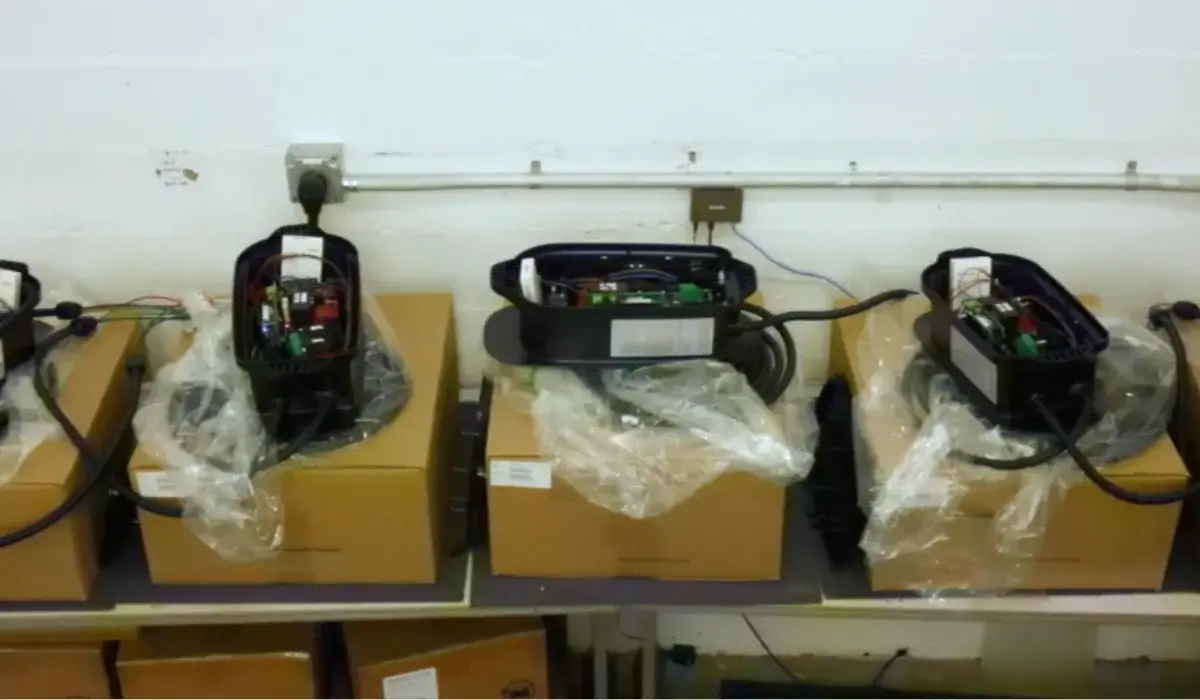
Uptime comes in two parts, since the chargers and the software behind them are measured separately. Ours run at 98% hardware uptime on the chargers and 99.95% server uptime on the software platform. Our hardware is built in Portland, Oregon, and because we design, install, support, and maintain it with 24/7 support and monitoring, faults get worked before they eat into a tight week.
Build It to Grow
A charging program that handles growth well looks different from one sized for opening day. It plans around a ratio rather than a count, it’s built around the real peak, the first install anticipates the second, access is managed before it has to be, and the decision to expand rests on a number somebody agreed to in advance.
If you’re thinking through EV charging for businesses with a workforce that keeps adding EV drivers, our team at OpConnect is glad to talk through how to plan the access side. No pressure either way, just a useful conversation if you want one.
Sources & Further Reading:
- Argonne National Laboratory — Managing Workplace Charging as Demand Grows (January 2026): https://www.anl.gov/taps/article/managing-workplace-charging-as-demand-grows
- CBRE — EV Adoption Creates More Demand for Workplace Charging Stations (May 2024): https://www.cbre.com/insights/articles/ev-adoption-creates-more-demand-for-workplace-charging-stations