
- About Us
- Who We Cater to
Who We Cater To
Lorem Ipsum is simply dummy text of the printing and typesetting industry. Lorem Ipsum has been the industry’s standard dummy text ever since the 1500s, when an unknown printer took a galley of type and scrambled
- Solutions
Solutions
Lorem Ipsum is simply dummy text of the printing and typesetting industry. Lorem Ipsum has been the industry’s standard dummy text ever since the 1500s, when an unknown printer took a galley of type and scrambled
- Resources
Resources
Lorem Ipsum is simply dummy text of the printing and typesetting industry. Lorem Ipsum has been the industry’s standard dummy text ever since the 1500s, when an unknown printer took a galley of type and scrambled
- Contact Us
- About Us
- Who We Cater to
Who We Cater To
Lorem Ipsum is simply dummy text of the printing and typesetting industry. Lorem Ipsum has been the industry’s standard dummy text ever since the 1500s, when an unknown printer took a galley of type and scrambled
- Solutions
Solutions
Lorem Ipsum is simply dummy text of the printing and typesetting industry. Lorem Ipsum has been the industry’s standard dummy text ever since the 1500s, when an unknown printer took a galley of type and scrambled
- Resources
Resources
Lorem Ipsum is simply dummy text of the printing and typesetting industry. Lorem Ipsum has been the industry’s standard dummy text ever since the 1500s, when an unknown printer took a galley of type and scrambled
- Contact Us
Electric Bus Charging Stations
OpConnect designs, installs, and supports electric bus charging stations for transit agencies, school districts, and municipal fleets nationwide.
Electric bus fleets run to a published schedule, and a bus that misses its first run is a problem the whole day inherits. We build charging infrastructure for transit agencies and school districts across the United States, with EV chargers manufactured in Portland, Oregon and 99.95% uptime, so every vehicle leaves the yard ready for its bus routes.

Electric Bus Charging Stations for Every Duty Cycle
Depot Charging
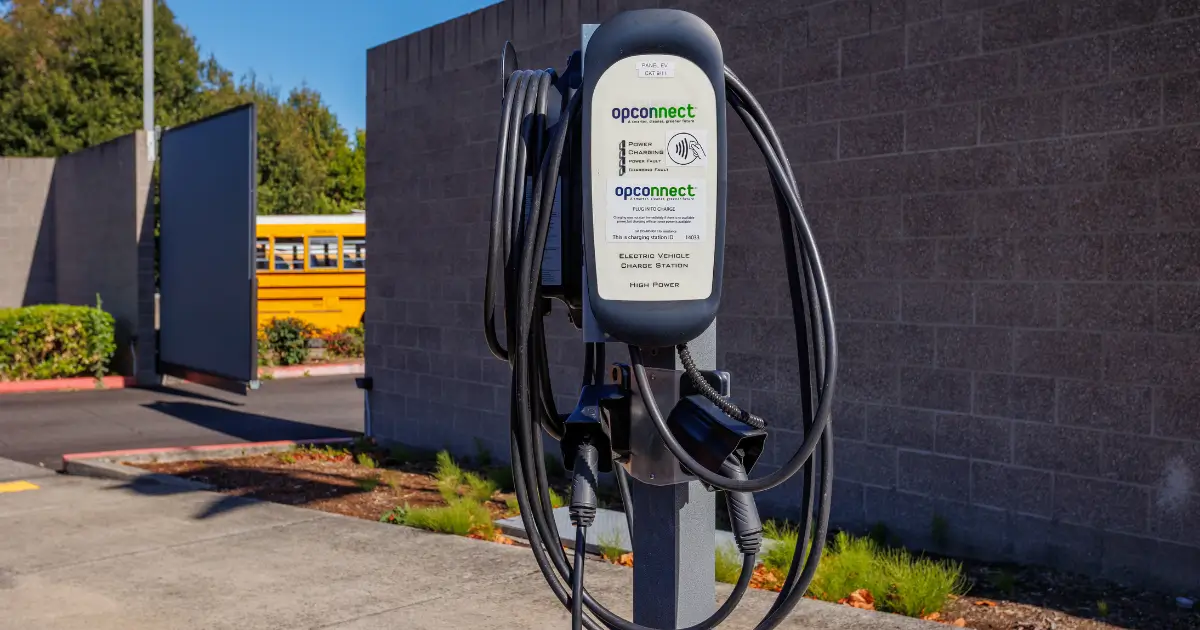
Opportunity and On-Route Charging
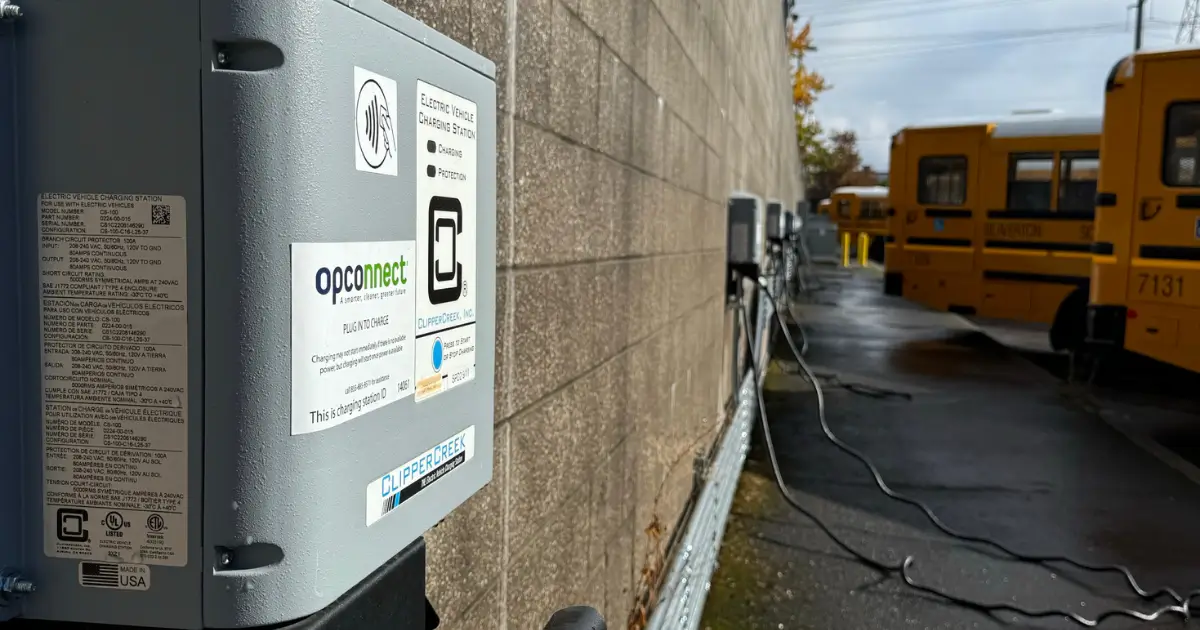
Some bus routes are too long to cover on an overnight charge alone, and that is where opportunity charging earns its place. DC chargers positioned at layover points let a driver top up during a scheduled break, turning an existing gap in the timetable into part of the charging process. We plan plug-in charging at the points your schedule already stops, using DC fast charger placement and fast-charging systems sized to the route rather than to a spec sheet. On-route charging works best as a supplement to the depot, not a replacement for it.
School Bus Fleets
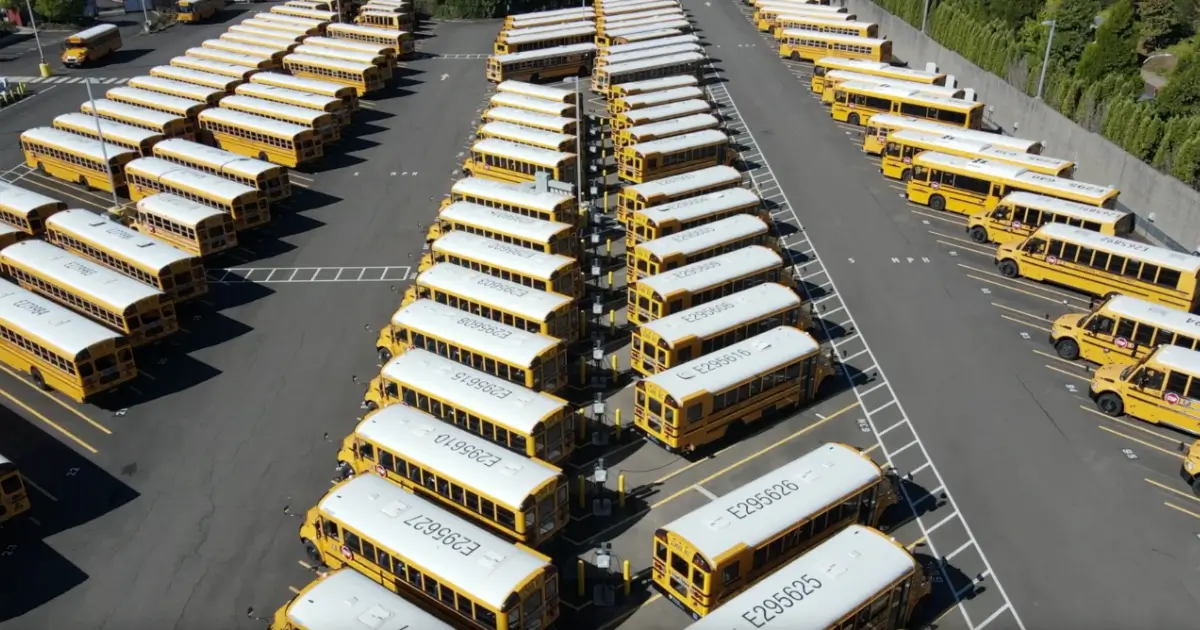
School transportation has the most predictable duty cycle in the transportation industry: two peaks, a long midday gap, and months of summer downtime. That use case suits bus electrification well, because there is time to charge when it matters least. We work with districts replacing diesel buses with electric motors across their EV bus fleets, designing a charging solution that fits the calendar the district already runs on rather than the other way around.
Why Transit and School Fleets Choose OpConnect
Uptime the Public Can See
Public transportation plays an important role in reducing traffic congestion, and public transit systems are judged on whether the bus shows up.
A transit authority cannot explain a missed run by pointing at a charger. Proactive monitoring and 24/7 support services keep our chargers at 99.95% uptime because public transport systems depend on it.
Built in the United States
We design and manufacture our own charging hardware in Portland, Oregon rather than reselling someone else’s.
Our electric vehicle supply equipment is built to work alongside the onboard chargers that bus manufacturers ship, so the charge points at your depot are not the variable in the system.
One Charging Management System
Monitor charger status, manage access, and track energy usage across every bus depot from a centralized platform.
Smart charging and smart systems sequence vehicles so energy demand stays level instead of spiking when the fleet plugs in at once, and real-time insights show you what happened overnight before the first run.
Software updates arrive without a truck roll, and the platform is built for seamless integration with the energy management tools you already use.
Built for the Coming Years
Global electric bus adoption is accelerating, and the charging station market is moving with it.
Charger sizing that fits today’s five buses should still work at fifty, which is why we deploy in phases.
Committing to bus electrification is a decisive step, and in the long run a properly planned depot is a better option than a site that has to be rebuilt every time the fleet grows.

Your Path to Bus Electrification
Route and Site Assessment
We start with how your fleet actually runs: bus routes, layover points, yard layout, and how long each vehicle sits between runs. Fleet operators know their schedule better than anyone, so charge planning starts with that rather than with a product catalog.
Charging Design
We handle charger sizing and placement, map the connection to your electric grid, and coordinate with your utility company on the energy demand your fleet will create. Load management keeps peak demand in check as more buses plug in, and where a site already uses energy storage or renewable energy sources, we design the charging around it so green energy actually reaches the vehicles.
Installation and Commissioning
Our installation teams handle setup and testing of all charging hardware, with minimal disruption to your operations. We make sure your drivers and yard staff know how the system works before we hand it over, and we stay involved through the first weeks of live service.
Ongoing Support and Optimization
We monitor performance, report on energy consumption, and tune for efficient charging as we learn how your fleet uses the system. Better energy efficiency means more electric power reaching the buses and less waste, and every route that moves off fossil fuels cuts greenhouse gas emissions at a scale personal vehicles cannot match.